Listen to this post

The Federal Circuit recently issued a significant decision in the ongoing patent litigation between Laboratory Corporation of America Holdings (Labcorp) and Qiagen Sciences, LLC, reversing a Delaware district court’s judgment that had found Qiagen liable for infringement of Labcorp’s patents-at-issue. In doing so, it vacated the $4.7 million damages award against Qiagen and ordered the district court to grant judgment as a matter of law (JMOL) of non-infringement.

Background

The patents-at-issue — U.S. Patent No. 10,017,810 and U.S. Patent No. 10,450,597 — cover methods for preparing DNA samples for sequencing, with a focus on “enrichment” techniques that allow researchers to selectively amplify regions of interest in a DNA sample.  Labcorp (as successor to ArcherDX and Massachusetts General Hospital) alleged that Qiagen’s DNA preparation kits infringed claims of both patents.

With respect to the ʼ810 patent, representative claim 16 reads as follows:

16. A method for preparing a nucleic acid for sequencing, the method comprising:

(i) ligating a universal oligonucleotide tail adaptor that comprises a first ligatable duplex end and a second unpaired end to a nucleic acid comprising a known target nucleotide sequence to produce a ligation product, the universal oligonucleotide tail adaptor comprising an amplification strand and a blocking strand, wherein a 3′ duplex portion of the amplification strand and a 5′ duplex portion of the blocking strand are substantially complementary and form the first ligatable duplex end;

(ii) amplifying the ligation product using a first target-specific primer that specifically anneals to the known target nucleotide sequence and a first adaptor primer having a nucleotide sequence identical to a first portion of the amplification strand; and

(iii) amplifying an amplification product of (ii) using a second target-specific primer that specifically anneals to the amplification product of (ii) and a second adaptor primer having a nucleotide sequence identical to a second portion of the amplification strand, wherein ligating in step (i) comprises performing an overhang ligation reaction, and wherein the universal oligonucleotide tail adaptor further comprises a barcode portion.

The district court construed the term “second target-specific primer” to mean “a single-stranded oligonucleotide comprising a 3′ portion comprising a nucleic acid sequence that can specifically anneal to a portion of the known target nucleotide sequence comprised by the amplicon resulting from step (b), and a 5′ portion comprising a nucleic acid sequence that is identical to a second sequencing primer.” The term “second adaptor primer” was construed to mean “a nucleic acid molecule comprising a nucleic acid sequence identical to a portion of the first sequencing primer and is nested with respect to the first adaptor primer.”

With respect to the ʼ597 patent, claim 1 was considered representative and reads as follows:

1. A method of preparing nucleic acids for analysis, the method comprising:

(a) contacting a first nucleic acid template comprising a sequence of a first strand of a double-stranded target nucleic acid with a complementary target-specific primer that comprises a target-specific hybridization sequence, under conditions to promote template-specific hybridization and extension of the target-specific primer;

(b) contacting a second nucleic acid template comprising a sequence of a second strand that is complementary to the sequence of the first strand of the double-stranded target nucleic acid with a plurality of different primers that share a common sequence that is 5′ to different hybridization sequences, under conditions to promote template-specific hybridization and extension of at least one of the plurality of different primers, wherein the different hybridization sequences have different 3′ ends, and wherein each primer of the plurality of different primers does not anneal to the same sequence of the double-stranded target nucleic acid as any other primer of the plurality of different primers,

wherein, following (a) and (b), an extension product is generated to contain both a sequence that is characteristic of the target-specific primer and a sequence that is characteristic of the at least one of the plurality of different primers; and

(c) subjecting the extension product to an amplification reaction comprising successive rounds of polymerase extension of i) a tail primer that comprises a 3′ sequence that specifically anneals to the complement of the common sequence and that comprises a 5′ tail sequence, and ii) a primer that specifically anneals to the complement of the target-specific hybridization sequence.

The term “target-specific primer” was construed to mean “a primer that has a level of complementarity between the primer and the target such that . . . the primer will anneal to and mediate amplification of the tar-get nucleic acid and will not anneal to or mediate amplification of non-target sequences present in a sample.” 

After a five-day trial, a Delaware jury found that Qiagen willfully infringed the asserted claims of both patents and awarded Labcorp $4.7 million in damages. The district court denied Qiagen’s post-trial motions for JMOL and for a new trial, prompting Qiagen’s appeal.

The Appeal

The Federal Circuit’s opinion focused on whether there was sufficient evidence to support the jury’s findings of infringement under the proper claim constructions. To cut to the chase, the panel found that there was insufficient evidence from which a reasonable jury could have found liability. The court’s analysis addressed both patents separately.

The ’810 Patent: “Identical” Does Not Mean “Identical to a Portion” and No Substantial Similarity

A central issue for the ’810 patent was the construction of the term “identical” in the context of a “second target-specific primer.” The district court had allowed the jury to decide whether a primer that was “identical to a portion” of another sequence could satisfy the claim requirement of being “identical.” The Federal Circuit panel found this was error, emphasizing that claim construction is a matter of law for the court, not a factual issue for the jury:

When the parties raise an actual dispute regarding the proper scope of these claims, the court, not the jury, must resolve that dispute.

The panel explained that “identical” means “the same,” not “identical to a portion,” and that, because the patent’s specification and claim language distinguished between “identical” and “identical to a portion,” conflating the two would render the claim language superfluous. Because Qiagen’s accused product only matched a portion of the claimed sequence, the court found that no reasonable jury could have found infringement under the correct construction.

Moreover, the Federal Circuit rejected the jury’s finding of infringement under the doctrine of equivalents, finding that Labcorp failed to provide the required “particularized testimony and linking argument” to show that Qiagen’s product performed substantially the same function, in the same way, to achieve the same result as the claimed invention. The court found that the accused primer in Qiagen’s kit did not enrich the target sequence or provide specificity as required by the claims of the ʼ810 patent, and thus could not be considered equivalent.

The ’597 Patent: “Target-Specific Primer” Requirement Not Met

For the ’597 patent, the court examined whether Qiagen’s “FP” primer met the claim requirement of a “target-specific primer.” The court found that the FP primer annealed to an artificial adaptor sequence common to all DNA fragments, not to the “nucleic acid to be analyzed” as required by the claims of the ʼ597 patent. The court also rejected Labcorp’s argument that the FP primer could satisfy the claim in combination with another primer, holding that the claim language required the “target-specific primer” to perform the function independently.

Takeaways

On remand, the district court is instructed to enter judgment of non-infringement in favor of Qiagen. The Federal Circuit’s opinion provides a clear reminder of the importance of careful claim drafting, rigorous claim construction, and the high evidentiary bar for proving infringement — especially under the doctrine of equivalents:

  • Claim Construction Is for the Court – Disputes over the meaning of claim terms must be resolved by the court as a matter of law, not left to the jury as factual questions.
  • Precision in Claim Language Matters – The Federal Circuit will generally enforce distinctions in claim language, such as “identical” versus “identical to a portion,” and broader interpretations that render claim terms superfluous will not be viewed favorably.
  • Doctrine of Equivalents Requires Specific Evidence – To prove infringement under the doctrine of equivalents, patentees must provide detailed, limitation-specific evidence showing substantial similarity in function, way, and result.
  • Independent Functionality Requirements – Where claims require a specific element to perform a function, patentees cannot rely on the combined action of multiple elements to satisfy that requirement.

Listen to this post

In a significant blow to Apple, the Federal Circuit recently vacated a summary judgment of noninfringement in the case of Taction Technology, Inc. v. Apple Inc. The dispute centers on Taction’s U.S. Patent Nos. 10,659,885 and 10,820,117, which Taction alleged that the Taptic Engine in Apple’s iPhone and Apple Watch products infringed the ʼ885 and ʼ117 patents.

Background

The ʼ885 and ʼ117 patents cover tactile transducers — devices that produce bass frequency vibrations for perception by touch, such as those used in haptic feedback systems in smartphones and smartwatches. Claim 1 of the ʼ885 patent was considered representative:

1. An apparatus for imparting motion to the skin of a user, the apparatus comprising:

a housing;

a plurality of coils capable of carrying electrical current;

a plurality of magnets arranged in operative proximity to the plurality of coils;

a moving portion comprising an inertial mass and the plurality of magnets;

a suspension comprising a plurality of flexures that guides the moving portion in a planar motion with respect to the housing and the plurality of conductive coils;

wherein movement of the moving portion is damped by a ferrofluid in physical contact with at least the moving portion; and

wherein the ferrofluid reduces at least a mechanical resonance within the frequency range of 40-200 Hz in response to electrical signals applied to the plurality of conductive coils.

Each asserted claim requires damping the moving portion. During claim construction, the district court concluded the asserted claims are limited to “transducers with highly damped output” based on the following statement made during prosecution of the parent of both the ’885 and ’117 patents: “Applicant’s invention, in contrast, is directed to transducers with highly damped output.” The district court had granted summary judgment of non-infringement in favor of Apple on two main grounds:

  1. Missing Element – The court adopted a construction of the claim term “highly damped output” that required the transducer to have 1) an output that is highly damped (i.e., substantially uniform or flat over the normal operating frequency range), 2) achieved by mechanical damping, and 3) a Q-factor of less than 1.5.  Based on this construction, the court found that Apple’s accused products, which have a Q-factor greater than 1.5, did not infringe the ʼ885 and ʼ117 patents.
  1. Stricken Expert Testimony –  The court struck the infringement opinions of Taction’s expert, Dr. James Oliver, finding that his opinions introduced a new theory not disclosed in Taction’s infringement contentions and that he improperly argued claim construction to the jury. Without this expert testimony, the court concluded that Taction lacked a viable claim of infringement against Apple.

The Appeal

The Federal Circuit found multiple errors in the district court’s approach, leading to a reversal and remand for further proceedings. With respect to the district court’s claim construction, the Federal Circuit addressed a few key aspects:

  • “Highly Damped Output” – The court agreed that the claims are limited to “transducers with highly damped output” based on a clear and unmistakable disclaimer made during prosecution of the parent of the patents-in-suit. Indeed, the disclaimer applies to patents in the same family when the disclaimer relates to the same subject matter as the claim language at issue. However, it rejected the district court’s further limitations. In this vein, the Federal Circuit found no basis in the intrinsic record to limit the claims to mechanical damping since the specification was broad enough to encompass other types of damping, and there was nothing in the intrinsic evidence that justified such a limitation.
  • Q-Factor Limitation – The district court had limited the claims to transducers with a Q-factor of less than 1.5 based on statements in the specification disparaging higher Q-factors. The Federal Circuit found that these statements were not sufficiently specific about the numeric value that would constitute a drawback and, thus, did not rise to the level of a clear and unmistakable disavowal. Moreover, related patents in the family included explicit Q-factor limitations, and reading such a limitation into the claims at issue would render those limitations superfluous.

With respect to the stricken expert testimony, the Federal Circuit held that the district court abused its discretion by striking Dr. Oliver’s infringement opinions. The district court had interpreted the local patent rules to require Taction to explain in its infringement contentions not just where but how each claim limitation is found in the accused Apple products. The Federal Circuit panel found no support for this requirement in the plain language of the local rules or in binding precedent and concluded that, as such, requiring adherence to such an unwritten requirement was arbitrary and an abuse of discretion by the district court. In addition, the panel found that, even if some paragraphs of Dr. Oliver’s report improperly argued claim construction, this did not justify striking his entire analysis regarding the “highly damped output” limitation, especially since his understanding of the term was consistent with the court’s own construction.

Takeaways

The Federal Circuit’s decision provides a valuable reminder on claim construction and guidance on the treatment of expert testimony and the proper application of local patent rules. 

  • Claim Construction Must Be Anchored in the Record – Limitations should not be read into claims absent clear lexicography or disavowal. The Federal Circuit remains vigilant against importing limitations from the specification into the claims without a strong basis.
  • Prosecution History Disclaimer – While clear and unmistakable disclaimers during prosecution can limit claim scope, such disclaimers must be closely tied to the claim language and subject matter at issue.
  • Expert Testimony – Courts should be cautious in striking expert opinions wholesale, especially where the expert’s understanding of claim terms aligns with the court’s own construction.
  • Strict Adherence to Local Rules – Courts should not impose unwritten requirements in local patent rules without clear notice to the parties. Striking expert testimony based on such requirements is likely to be reversed on appeal.

Now that the case returns to the district court, Taction gets an extra bite at Apple. As compared to Optis Cellular Technology, LLC v. Apple Inc. (22-1925), where the Federal Circuit vacated both the infringement and damages judgments against Apple in a patent case involving standard-essential patents (SEPs) related to Long-Term Evolution (LTE) technology, Apple’s outcome here was rotten.

Listen to this post

In a significant decision for patent law and the fitness equipment industry, a panel of the Federal Circuit reversed a partial dismissal of PowerBlock Holdings, Inc.’s patent infringement claims brought against iFit, Inc. in the U.S. District Court for the District of Utah. The infringement allegations against iFit were based on PowerBlock’s U.S. Patent No. 7,578,771, which includes claims to a weight selection and adjustment system for a selectorized dumbbell. The opinion further clarifies the application of 35 U.S.C. § 101 to mechanical inventions and underscores the importance of claim specificity and inventive concept in patent eligibility determinations.

The Claimed Invention

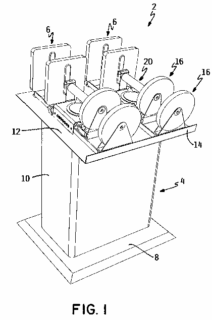
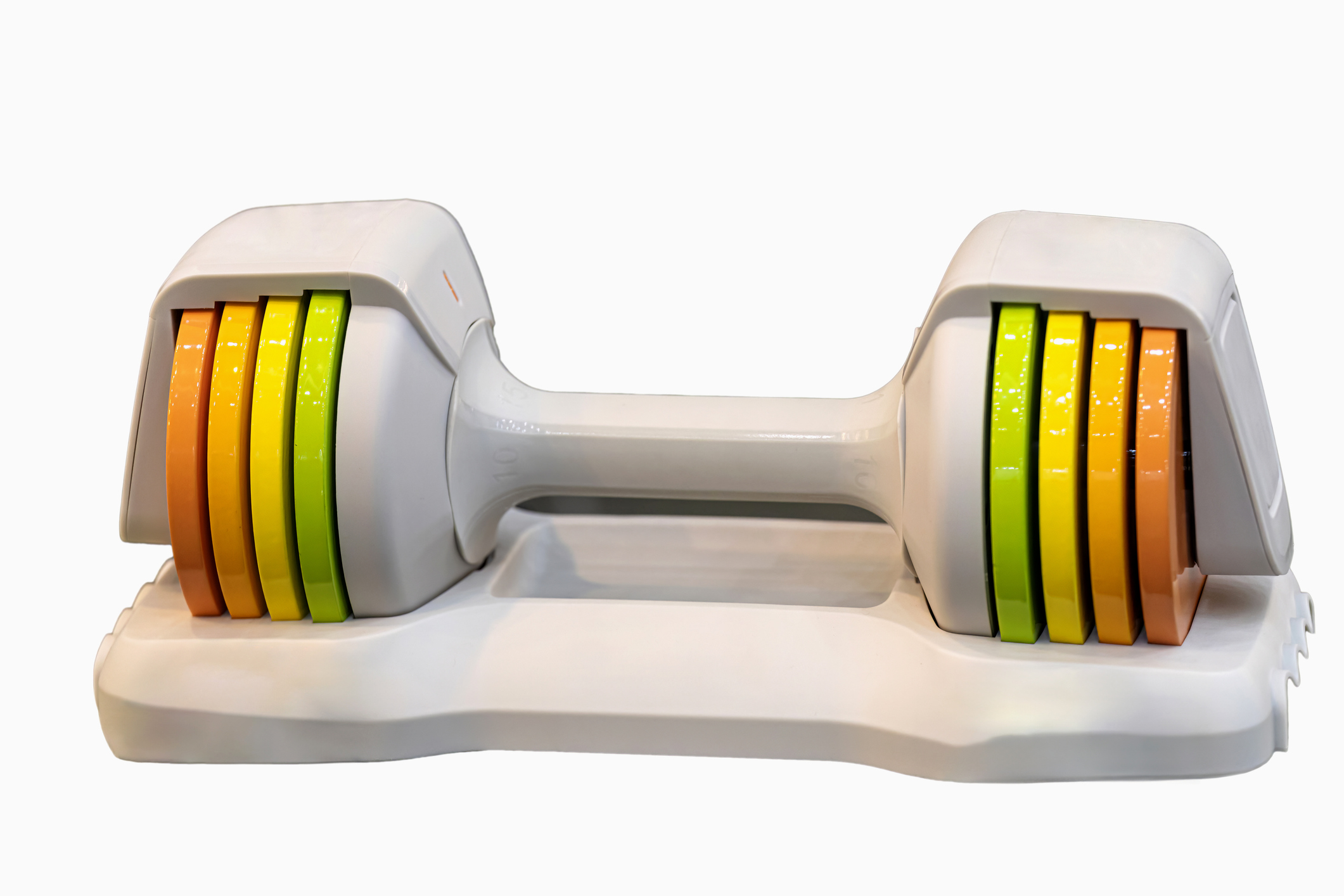
PowerBlock’s patent claims to address long-standing problems (back in 2007 when the ʼ771 patent was filed) with traditional selectorized dumbbells, which require users to manually adjust mechanical selectors to change the weight.  This manual process can lead to improper engagement, posing safety risks and inconvenience for the user. The system described and claimed in the ʼ771 patent automates weight selection using an electric motor that moves a selector to couple the desired number of weight plates to each end of the dumbbell handle, based on user input. The claims asserted against iFit describe a system including stacks of nested weight plates, a handle, a movable selector with multiple adjustment positions, and an electric motor operatively connected to the selector.

The District Court’s Ruling

After the complaint was filed by PowerBlock, iFit flexed with a motion to dismiss under Rule 12(b)(6) arguing that the asserted claims were invalid as patent ineligible under 35 U.S.C. § 101. The district court, applying the Supreme Court’s two-step Alice/Mayo framework for patent eligibility under § 101, found that all but one claim of the ʼ771 patent were ineligible under § 101. At step one of the Alice/Mayo framework, the court concluded that the claims were directed to the abstract idea of automated weight stacking, implemented with generic components. At step two, the court determined that the claims did not add significantly more than the abstract idea itself, thus failing the test for patent eligibility. Only one claim (claim 19), which recited means for adjusting the dumbbell weight without user contact, survived the motion to dismiss.

The Federal Circuit’s Analysis and Reversal

The Federal Circuit panel, comprised of the Hon. Richard G. Taranto and Hon. Kara F. Stoll, circuit judges, and the Hon. Mark C. Scarsi, district judge, for the United States District Court for the Central District of California, sitting by designation, disagreed with the district court’s analysis and conclusion and emphasized the need to consider the claims “in their entirety” to avoid oversimplifying the scope. The court found that claim 1, representative of the asserted claims, was not directed to an abstract idea but rather to a specific mechanical improvement in selectorized dumbbells:

1. A weight selection and adjustment system for a selectorized dumbbell, which comprises:

(a) a selectorized dumbbell, which comprises:

(i) a stack of nested left weight plates and a stack of nested right weight plates;

(ii) a handle having a left end and a right end; and

(iii) a movable selector having a plurality of different adjustment positions in which the selector may be disposed, wherein the selector is configured to couple selected numbers of left weight plates to the left end of the handle and selected numbers of right weight plates to the right end of the handle with the selected numbers of coupled weight plates differing depending upon the adjustment position in which the selector is disposed, thereby allowing a user to select for use a desired exercise weight to be provided by the selectorized dumbbell; and

(b) an electric motor that is operatively connected to the selector at least whenever a weight adjustment operation takes place, wherein the electric motor when energized from a source of electric power physically moves the selector into the adjustment position corresponding to the desired exercise weight that was selected for use by the user.

The panel explained that the claim’s limitations — including the configuration of weight plates, the handle, the movable selector, and the electric motor — provided sufficient specificity and structure to conclude that it “is not directed to an abstract idea” and to avoid preemption of all automated weight selection systems.

The panel distinguished this case from prior decisions where claims merely recited abstract results or generalized steps without concrete implementation. Here the claims required a particular arrangement of mechanical components and a defined method for automating weight adjustment, making them “‘a concrete thing, consisting of parts, or of certain devices and combination of devices…,” similar to a GPS satellite patent that the Federal Circuit upheld under § 101 over a decade ago.

The Key Takeaways

The Federal Circuit’s reversal means that the case will return to the district court for additional proceedings. This decision reinforces several important principles for patent eligibility:

  • Specificity Matters – Claims that recite specific mechanical structures and their interactions are less likely to be deemed abstract.
  • Avoiding Overgeneralization – Claims must be considered in their entirety, and conventional components should not be disregarded simply because they appear in the prior art.
  • Mechanical Inventions Are Not Excluded – This opinion confirms that mechanical improvements, even if broad, can be patent-eligible if they provide a concrete technological solution. In other words, not all automation or mechanical improvements are abstract ideas, and well-drafted claims directed to concrete technological solutions remain protectable under U.S. patent law.

Listen to this post

In Sunkist Growers, Inc. v. Interstate Distributors, Inc. (No. 24-1212), the Federal Circuit reversed the Trademark Trial and Appeal Board’s decision dismissing Sunkist’s opposition to Interstate Distributor’s (IDI) attempt to register the mark KIST in standard characters and in a stylized mark for soft drinks. The Federal Circuit disagreed with the board’s finding of no likelihood of confusion between IDI’s KIST mark and Sunkist’s various registered SUNKIST marks.

Board Decision

In October 2019, IDI filed an intent-to-use application to register KIST in standard characters and a related stylized mark for use with “[s]oft drinks, namely, sodas and sparkling water; concentrates and syrups for making soft drinks.” Sunkist opposed the registration based on a likelihood of confusion between IDI’s KIST marks and various SUNKIST registered marks owned by Sunkist.

The board dismissed Sunkist’s opposition. Analyzing the DuPont factors relevant to likelihood of confusion, the board concluded that although (1) similarity of the goods, (2) similarity of trade channels, (3) conditions of sale, and (4) strength of opposer’s mark all favored likelihood of confusion, the similarity of marks and the lack of evidence of actual confusion were determinative in finding no likelihood of confusion. With respect to similarity of the marks, the board focused on the different commercial impressions created by the marks. Specifically, the board found that the commercial impressions were different because Sunkist marketed SUNKIST marks with reference to a sun, while IDI marketed KIST marks with reference to a kiss.

Federal Circuit Decision

The Federal Circuit disagreed with the board’s conclusion regarding similarity of the marks. The court concluded that there was not substantial evidence to support the board’s underlying findings on the commercial impression of the marks. The board found that IDI marketed the KIST mark with reference to a kiss by relying on a marketing image showing the KIST mark next to a pair of lips. The Federal Circuit rejected that image as substantial evidence of a different commercial impression for several reasons: 1) the KIST mark was not a design mark that included the image of the lips; 2) not all of IDI’s marketing materials used the lips image; 3) the broader marketing presentation that the image came from had instances of the KIST mark used without the lips imagine; 4) that presentation did not emphasize the lips image, but instead emphasized different flavors; and 5) there was no evidence that marketing materials with the lips image were shown to consumers. With respect to the commercial impression of the SUNKIST mark, the Federal Circuit faulted the board for its focus on the sun design when the overwhelming majority of SUNKIST registrations submitted were standard character marks without the sun design and the record contained evidence of SUNKIST products marketed without the sun design. In light of the record, the court concluded that the board’s finding on the similarity of the marks was not supported by substantial evidence.

Having rejected the board’s conclusion on the similarity of the marks, the court then moved to the overall finding on likelihood of confusion. The only remaining factor weighing in favor of likelihood of confusion was no evidence of actual confusion. However, as the court noted, under its precedent, the failure to prove actual confusion was not dispositive. As a result, the court determined that there was a likelihood of confusion between IDI’s KIST mark and Sunkist’s SUNKIST mark and reversed the board’s decision dismissing the opposition.

Takeaways

The Federal Circuit’s decision illustrates that an applicant or mark owner should be wary of relying on unclaimed, sporadically used design elements to differentiate its mark from other pre-existing marks.

Listen to this post

In Realtek Semiconductor Corporation v. ITC (23-1187), the Federal Circuit concluded that it lacked jurisdiction to decide whether the International Trade Commission (ITC) correctly denied Realtek’s motion for sanctions against Future Link Systems, LLC because the ITC decision did not involve a final determination affecting the entry of articles. As a result, the panel did not address the merits of Realtek’s appeal.   

Background

In 2019, Future Link entered into a license agreement with MediaTek, Inc., which stipulated a lump sum payment if Future Link filed a lawsuit against Realtek. After filing a complaint with the ITC accusing Realtek of patent infringement, Future Link subsequently settled with a third party and told Realtek that the settlement resolved the underlying investigation. Realtek filed a motion for sanctions alleging that the agreement between Future Link and MediaTek was improper.

Despite expressing concern about the agreement between Future Link and MediaTek, the administrative law judge (ALJ) denied the sanctions motion on the basis that the agreement did not influence Future Link’s decision to file the complaint. Future Link then withdrew its complaint, and the investigation was successfully terminated. As such, there was no final determination on the merits by the Commission. 

Once the ITC adopted the ALJ’s order, Realtek appealed the denial of the sanctions motion to the Federal Circuit.

Jurisdictional Analysis

The Federal Circuit’s jurisdiction to hear appeals from the ITC is governed by 28 U.S.C. § 1295(a)(6), which allows for the review of final determinations under 19 U.S.C. § 1337. 

On appeal, Realtek was not able to persuade the panel that the ITC’s denial of the sanctions motion was a final determination within Section 1295(a)(6). Rather, the panel explained that Realtek’s position misconstrued Federal Circuit case law and that a final decision on the merits, such that it would trigger jurisdiction under 28 U.S.C. § 1295(a)(6), must be a decision that is tied to the entry of articles.  In doing so, the panel harkened back to an almost 40-year old decision in which the appellant asked the Federal Circuit to review a decision by the Commission regarding the declassification of certain materials. More specifically, in Viscofan, S.A. v. U.S. International Trade Commission, the Federal Circuit found that it did not have jurisdiction to review an ITC decision on declassification because (1) 28 U.S.C. § 1295(a)(6) only gave the Federal Circuit exclusive jurisdiction to review final determinations “relating to unfair practices in import trade” and (2) Congress specifically defined final determinations to include those set forth in the first sentence of Section 1337(c):

The Commission shall determine, with respect to each investigation conducted by it under this section, whether or not there is a violation of this section, except that the Commission may, by issuing a consent order or on the basis of an agreement between the private parties to the investigation, including an agreement to present the matter for arbitration, terminate any such investigation, in whole or in part, without making such a determination.

In other words, ITC decisions that do not affect the validity of an exclusion order are not within the Federal Circuit’s jurisdiction. Since Realtek’s appeal sought sanctions unrelated to the entry of articles, the appeal did not meet this requirement and was dismissed.

Takeaways

While the Federal Circuit did not reach the merits of Realtek’s appeal on the sanctions issue, this decision highlights the importance of understanding the specific jurisdictional boundaries of the Federal Circuit in ITC-related matters, particularly concerning sanctions and other issues that are not ancillary to a final determination. As an aside, the panel did lend some insight into what “ancillary issues” would still be deemed to fall within Federal Circuit jurisdiction under 28 U.S.C. § 1295(a)(6). In this aspect, a decision not to institute an investigation or dismissal for lack of subject matter jurisdiction would be an ancillary issue appropriate for appellate review under Section 1295(a)(6) because they have the effect of conclusively denying the complainant’s request to exclude particular items from entry. 

However, the panel recognizes that, based on the statute, it remains an open question which court can review this type of matter.  The only guidance from the panel on this question is that “in other settings, courts have held that, in the absence of an indication of where judicial review will take place, ‘the normal default rule is that persons seeking review of agency action go first to district court rather than to a court of appeals.’”

Listen to this post

Last week, the Federal Circuit vacated both the infringement and damages judgments against Apple in a patent case that involves standard-essential patents (SEPs) related to Long-Term Evolution (LTE) technology brought in the Eastern District of Texas by Optis Cellular Technology, LLC. In Optis Cellular Technology, LLC v. Apple Inc. (22-1925), a panel for the Federal Circuit found that a single infringement question covering multiple patents in a jury verdict form violated Apple’s right to a unanimous jury verdict and remanded the case for a new trial. In addition, the panel addressed several patent eligibility issues and procedural errors in the trial proceedings. As a result, Apple has a second bite at the apple to try to avoid damages.

Background

Optis sued Apple in the Eastern District of Texas alleging that various Apple products implementing the LTE standard infringed five of Optis’ SEPs. The jury initially found Apple infringed certain claims of the asserted patents and awarded $506.2 million in damages. Apple moved for a new trial, arguing that the jury did not have an opportunity to hear evidence regarding Optis’ obligation to license the asserted SEPs on fair, reasonable, and nondiscriminatory (FRAND) terms. The district court granted a new trial on damages, which ultimately resulted in a reduced damages award to Optis of $300 million. Once its post-judgment motions were denied, Apple appealed to the Federal Circuit.

The Appeal

There is a lot to unpack here, but the core issues on appeal are summarized below:

  • Whether the single infringement question on the verdict form covering all the asserted SEPs violated Apple’s right to jury unanimity;
  • Whether claims 6 and 7 of U.S. Patent No. 8,019,332 (ʼ332 patent) are patent ineligible under 35 U.S.C. § 101;
  • Whether the district court erred in construing claim 8 of the U.S. Patent No. 8,102,833 (ʼ833 patent);
  • Whether the district court erred in finding claim 1 of U.S. Patent No. 8,411,557 (’557 patent) not indefinite under 35 U.S.C. § 112; and
  • Whether the district court erred in admitting certain damages-related evidence.

With respect to the verdict form, the panel held that the single infringement question on the verdict form, which covered all five asserted SEPs, violated Apple’s right to a unanimous verdict.  While Optis argued that, because the $506.2 million damages award “corresponded exactly to the sum of the five numbers that Optis’s damages expert gave as the measure of damages for each patent,” it was clear that the jury was unanimous in finding all asserted claims were infringed, the panel disagreed and explained that each asserted SEP constitutes an independent cause of action requiring separate infringement questions for each patent to ensure a unanimous verdict.  

With respect to patent eligibility, the panel reversed the district court’s finding that claims 6 and 7 of the ʼ332 patent were not directed to an abstract idea under 35 U.S.C. § 101. In particular, the panel concluded that these claims were directed to a mathematical formula, an abstract idea, and remanded for further analysis under the Alice/Mayo framework. The panel also reversed the district court’s finding that the term “selecting unit” in claim 1 of the ʼ557 patent did not invoke 35 U.S.C. § 112 ¶ 6. In this aspect, the panel determined that the term “unit” does not sufficiently connote structure and is similar to other terms that held to be nonce terms similar to “means” such that they invoke § 112 ¶ 6. Since the term was found to invoke § 112 ¶ 6, on remand, the district court will need to conduct the second step of the means-plus-function analysis and determine whether the specification discloses adequate corresponding structure.  However, the Federal Circuit affirmed the district court’s construction of claim 8 of the ʼ833 patent, rejecting Apple’s argument that the claim required mapping to start from the last row of a matrix.

Finally, the Federal Circuit found that the district court abused its discretion by admitting a settlement agreement between Apple and Qualcomm, which did not involve any of the SEPs at issue in this case, and related expert testimony. Before the damages retrial before the district court, Apple had unsuccessfully argued the settlement agreement was irrelevant and should be excluded “because any alleged relevance is outweighed by the substantial risk of confusion and unfair prejudice to Apple.” While the panel did not deem the settlement to be irrelevant, it held that the probative value of the settlement agreement was substantially outweighed by the risk of unfair prejudice to Apple.

Takeaways

This decision underscores the importance of ensuring jury unanimity in patent cases involving multiple patents. While general verdict questions that apply to more than one asserted patent or patent claim may seem attractive to patent owners and, at least in this case, signed off on by the district court judge, this verdict format is going to cause problems on appeal. The decision also highlights the continued scrutiny applied to patent eligibility, as well as the admissibility of settlement agreements in determining reasonable royalties.

Listen to this post

Does copyright law require that a human create a work? Yesterday the D.C. Circuit in Thaler v. Perlmutter held that it does and that a machine (such as a computer operating a generative AI program) cannot be designated as the author of the work. However, the D.C. Circuit refrained from saying more for now, leaving other questions about the use of AI when creating works for another day.

Dr. Stephen Thaler, a computer scientist who works with artificial intelligence, submitted a copyright application in 2019 for the image below, which he titled “A Recent Entrance to Paradise.” On the application, Thaler identified himself as the claimant, while designating a generative AI platform that he created and called the “Creativity Machine” as the author. For explanation of how the copyright was transferred from the machine as author to himself as claimant, Thaler stated his “ownership of the machine” caused the transfer. He would later argue that some form of work-for-hire transferred ownership to himself.

The Copyright Office denied registration, holding that copyright law requires a human author. Thaler appealed the decision to the District Court for the District of Columbia, which affirmed. As part of his case before the district court, Thaler raised, for the first time, the argument that he was in fact the author based on his creation of the Creativity Machine. However, because he had claimed on the record that the machine was the author throughout the proceedings before the Copyright Office, the district court held that he had waived this argument. Thaler then appealed to the D.C. Circuit Court of Appeals.

The D.C. Circuit’s decision yesterday affirmed both the Copyright Office’s and the district court’s decisions refusing Thaler’s copyright application for registration. On the key issue of copyright authorship, the court held that the text and structure of the Copyright Act requires a human author. Section 201 of the Copyright Act states that ownership “vests initially in the author or authors” of a work. While “author” is undefined, the court looked to at least seven other provisions throughout the Copyright Act that required various acts or states of mind of the author. These included reliance on the author’s life, references to the author’s widow or widower and children, the act of signature required for copyright transfer, and the intent needed to create a joint work of authorship. However, the court deemed none of these requirements applicable to a machine “author.” The court also relied on the Copyright Office’s long-standing policy of refusing registration to nonhuman authors and other appellate court decisions by the Seventh and Ninth circuits that refused claims of copyright authorship inhering in nature, “otherworldly entities,” or animals. Finally, the court held that Thaler’s work-for-hire claim failed at least because the machine had not signed any document designating the work as being made for hire, and that he had waived any claim of personal authorship because he had failed to raise it before the Copyright Office. Therefore, the D.C. Circuit affirmed the denial of registration of the work with the Creativity Machine designated as the author.

While this case is the first to address the question of copyright authorship in the context of generative artificial intelligence, its holding is not unexpected. As briefly referenced above, other appellate courts have addressed the question of nonhuman authorship in other scenarios and come to the same conclusion. Therefore, while Thaler is important for extending the same holding to the context of AI creations, the requirement of human authorship is neither new nor unusual. As the Ninth Circuit held in Naruto v. Slater (a case involving the famous “monkey selfie” photograph), there is a strong presumption in the law that statutes are written with humans as the subjects of rights, not animals or machines. The numerous textual references to the lives, acts, and intentions of authors in the Copyright Act made it easy for the D.C. Circuit not to overturn that presumption here. The D.C. Circuit also held that it did not need to address whether the U.S. Constitution requires a human author under the current case. That issue is left for a future litigant to contend with.

Moreover, Thaler presented his case for machine authorship in the most extreme form possible — a claim that the author was solely the “Creativity Machine,” with no human input at all. As the court references late in the decision, there have now been at least four copyright applications denied registration in whole or in part by the Copyright Office because the author used AI in creating or editing a work, but also relied on human input and human claims of authorship. The D.C. Circuit wisely decided to let that issue await a future ruling. Yet, as a result of that caution, litigants should recognize the limitations of the Thaler decision.

Finally, both Thaler and the other cases coming through the Copyright Office only concern AI creation of visual works of art. They do not concern other fields of creative works, such as written works or music. While the main holding of Thaler — that copyright protection cannot be granted where a machine is the sole creator — will certainly apply in these other fields, the permissible contours of AI-human interaction and their effect on authorship in these other categories of works are even more unclear given the lack of disputes arising to date.

Listen to this post

Fair use — a critical defense in copyright law that allows limited use of copyrighted material without permission — has emerged as a key battleground in the wave of artificial intelligence (AI) copyright litigation. In a significant revision of his earlier position, Judge Stephanos Bibas in the United States District Court for the District of Delaware has dealt a blow to artificial intelligence companies by blocking their ability to rely on this defense in Thomson Reuters Enterprise Centre GmbH v. ROSS Intelligence Inc.

Fair use serves as a safety valve in copyright law, permitting uses of copyrighted works for purposes such as criticism, commentary, news reporting, teaching, scholarship, or research. Courts evaluate fair use through four factors, with particular emphasis on whether the use transforms the original work and how it affects the market for the copyrighted work.

The case originated when Thomson Reuters sued ROSS Intelligence for using content from Westlaw — the legal research platform’s headnotes and proprietary Key Number System — to train an AI-powered legal research competitor. ROSS had initially sought to license Westlaw content, but when Thomson Reuters refused, ROSS turned to a third-party company, LegalEase Solutions. LegalEase created approximately 25,000 legal question-and-answer pairs, allegedly derived from Westlaw’s copyrighted content, which ROSS then used to train its AI system.

In September 2023, Bibas denied Thomson Reuters’ motion for summary judgment on fair use, finding that the question was heavily fact-dependent and required jury determination. He particularly emphasized factual disputes about whether ROSS’s use was transformative and how it affected potential markets.

However, in August 2024, Bibas took the unusual step of continuing the scheduled trial and inviting renewed summary judgment briefing. His opinion represents a dramatic shift, explicitly acknowledging that his “prior opinion wrongly concluded that I had to send this factor to a jury.” While noting that fair use involves mixed questions of law and fact, Bibas recognized that the ultimate determination in this case “primarily involves legal work.”

Bibas’ unusual move to invite renewed briefing stemmed from his realization, upon deeper study of fair use doctrine, that his earlier ruling afforded too much weight to factual disputes and did not fully account for how courts should assess transformative use in AI-related cases. Rather than viewing transformation through the lens of whether ROSS created a novel product, Bibas recognized that the key question was whether ROSS’s use of Thomson Reuters’ content served substantially the same purpose as the original works.

He concluded that while fair use involves factual elements, the dispositive questions in the case were ultimately legal ones appropriate for resolution by the court. His key analytical shifts included rejecting the notion that ROSS’s use might be transformative merely because it created a “brand-new research platform.”

Critically, Bibas distinguished ROSS’s use from cases like Google v. Oracle where copying was necessary to access underlying functional elements. While Google needed to copy Java API code to enable interoperability between software programs, ROSS had no similar technical necessity to copy Westlaw’s headnotes and organizational system. ROSS could have developed its own legal summaries and classification scheme to train its AI — it simply found it more expedient to build upon Thomson Reuters’ existing work.

The concept of “transformative” use lies at the heart of the fair use analysis. This principle was recently examined by the Supreme Court in Andy Warhol Foundation for the Visual Arts, Inc. v. Goldsmith, where the Court significantly narrowed the scope of transformative use under the first fair use factor. The Court held that when two works serve “substantially the same purpose,” the fact that the second work may add “new expression, meaning, or message” is not enough to tip the first factor in favor of fair use.

This framework for analyzing transformative use provides important context for understanding how courts may evaluate AI companies’ fair use defenses. AI companies have consistently argued that their use of copyrighted materials for training data is transformative because the AI systems learn patterns and relationships from the works rather than reproducing their expressive content. They contend that this process fundamentally transforms the original works’ purpose and character. However, Bibas’ ruling suggests courts may be increasingly skeptical of such arguments, particularly when the resulting AI products compete in similar markets to the original works.

While this ruling represents a setback for one of the key defenses believed to be available to AI companies in copyright litigation, fair use is only one of several defenses these companies are raising in more than 30 pending lawsuits. Other defenses include arguments about copyrightability, substantial similarity, and whether training data uses constitute copying at all. A weakening of the fair use defense, while significant, does not necessarily predict the ultimate outcome of these cases.

Additionally, this case involved a particularly direct form of market competition — an AI system trained on legal content to compete with the original legal research platform. Other cases involving different types of training data or AI applications that don’t directly compete with the source materials might be distinguished. For instance, an AI trained on literary works to generate news articles might present a more compelling case for transformative use since the end product serves a fundamentally different purpose than the training data.

Nevertheless, Bibas’ ruling may alter how AI companies approach training data acquisition. If other courts follow his lead in viewing fair use primarily as a legal rather than factual determination, these companies may explore licensing agreements with copyright holders — a process that some have already undertaken.

Listen to this post

Trademark law protects businesses’ brand identities and helps prevent consumer confusion. The U.S. trademark system operates at both federal and state levels. Federal registration through the United States Patent and Trademark Office (USPTO) gives nationwide protection and the right to use the coveted ® symbol, along with crucial benefits such as constructive notice of ownership throughout the country and presumptive validity of the mark. Federal registration also enables trademark holders to enforce their rights in federal courts and can serve as a basis for securing trademark protection in foreign countries.

State trademark systems provide vital protection for businesses operating primarily within a single state or in industries where federal registration may be unavailable due to federal restrictions. For cannabis businesses in particular, state protection has become essential given the industry’s current legal status.

For federal trademark registration, your mark must be used in lawful interstate commerce and function as a source identifier rather than merely describing the product, as well as be distinctive. Distinctiveness can be inherent, like the invented word KODAK, or acquired through market use, like AMERICAN AIRLINES. These requirements ensure trademarks serve their core purpose: clearly indicating the source of goods and services while allowing businesses to build and maintain valuable brand identities.

Cannabis Trademark Challenges

Marijuana’s federal status as a Schedule I controlled substance under the Controlled Substances Act creates significant barriers for trademark protection. The USPTO consistently holds that use of a mark in commerce must be lawful under federal law to qualify for federal registration. This means marijuana businesses operating under a state-legal marijuana regime still cannot access federal trademark protection for their core products and services.

The 2018 Farm Bill created one notable exception by legalizing hemp (cannabis with 0.3% or less delta-9 THC). This opened a narrow pathway for federal trademark protection of hemp-derived goods and services. However, the USPTO maintains strict oversight: Marks for products exceeding the THC threshold — as well as consumable products containing hemp — remain ineligible for federal registration because they cannot be lawfully sold in interstate commerce.

State trademark systems have become a significant protection route for cannabis businesses. States with legal cannabis typically allow registration of cannabis-related marks. However, state registration comes with significant limitations. Most importantly, these rights only exist within state borders. For businesses operating across multiple states, this creates a complex patchwork of protection that can be challenging to manage and enforce. State rights may also offer less robust enforcement mechanisms compared to federal registration.

Protection Strategies

Cannabis businesses can implement several effective approaches to protect their intellectual property rights. Many cannabis operators successfully register federal trademarks for ancillary goods and services that don’t directly involve federally prohibited substances. For example, a dispensary might register its mark for branded merchandise like clothing and accessories, or for smoking devices that don’t contain cannabis. Educational services about cannabis cultivation or industry best practices can also qualify, provided they don’t promote federally illegal substances.

When developing trademark strategies, cannabis businesses should consider implementing a combination of these approaches to create the most comprehensive protection possible under current law. This might involve securing federal registration for ancillary goods and services, while simultaneously pursuing state registrations in key markets and maintaining documentation of common law rights.

Retail store services present another avenue for protection, though businesses must carefully describe these services to exclude federally prohibited goods. The USPTO examines specimens, applicants’ websites, and other evidence of use carefully to ensure applicants aren’t attempting to register marks for federally prohibited cannabis products under the guise of lawful goods or services.

Common law rights offer yet another important layer of protection. These rights arise automatically from use of a mark in commerce, even without registration. Under common law principles, the first entity to use a mark in a particular geographic area generally acquires priority rights within that region. While valuable, enforcing common law rights typically requires proving actual use in commerce and establishing consumer recognition of the mark — a more challenging process than enforcing registered marks.

State registration creates a public record of an owner’s rights and provides several meaningful benefits. It can deter potential infringers, simplify enforcement actions within the state, and serve as valuable documentation of trademark rights in anticipation of eventual federal legalization. State registrations often provide procedural advantages in state court proceedings, such as presumptive evidence of ownership and validity of the mark.

Current Developments

The Department of Justice has proposed rescheduling cannabis from Schedule I to Schedule III of the Controlled Substances Act. The DEA’s public hearing on this has been pushed to early 2025. While this delay has prompted some industry observers to question the inevitability of rescheduling, we maintain that rescheduling remains likely because it has broad bipartisan support and there is significant administrative momentum already in motion. The rescheduling process requires coordinated review by both the Department of Health and Human Services and the DEA, with each agency evaluating different aspects of the proposed change. Robert F. Kennedy Jr., the current nominee for HHS secretary, supports cannabis legalization and has proposed using cannabis tax revenue for drug treatment programs.

Rescheduling to Schedule III could fundamentally alter trademark registration rules. While cannabis would still be federally regulated, businesses might finally be able to register federal trademarks by meeting the “lawful use in commerce” requirement. However, the exact scope of available protection would likely depend on specific implementing regulations and USPTO guidance.

Looking Ahead

Federal legalization would transform cannabis trademark protection, though implementation would likely unfold gradually through a complex regulatory process. New regulatory compliance requirements would likely emerge as conditions for registration, potentially including specific product testing standards, labeling requirements, and marketing restrictions that could impact trademark strategies.

Cannabis businesses require sophisticated brand protection strategies that work now and preserve future opportunities. This starts with creating strong, distinctive brands that can withstand scrutiny under traditional trademark principles while navigating industry-specific regulatory constraints. Businesses should maintain robust state trademark registrations and document common law usage meticulously. Businesses also should develop contingency plans for various legalization scenarios, including strategies for converting state rights to federal registrations and consolidating trademark portfolios across jurisdictions.

As federal legalization approaches, businesses might consider filing intent-to-use applications at strategic moments to secure priority dates for future registration. International opportunities may also emerge as more countries liberalize their cannabis laws. Protection under international trademark treaties such as the Madrid Protocol could become possible for U.S. cannabis businesses following federal legalization, though this will require careful analysis of varying national laws regarding cannabis.

Success in this rapidly evolving landscape requires cannabis businesses to be both proactive in protecting their current rights and strategically positioned for the significant changes that federal legalization will bring.

Listen to this post

Late last week in Natera, Inc. v. NeoGenomics Laboratories, Inc. (24-1324), the Federal Circuit affirmed a preliminary injunction ruling from the lower court that mostly prohibits NeoGenomics from selling its oncology test marketed as RaDaR®. In doing so, the appellate panel confirms that the district court need not conduct claim construction at the preliminary injunction stage and also reiterates an accused infringer’s burden when arguing invalidity to challenge a patent owner’s likelihood of success on the merits of its infringement claim(s). 

Background

Last summer, Natera sued competitor NeoGenomics in the Middle District of North Carolina for infringement of U.S. Patent Nos. 11,519,035 and 11,530,454. This came just a few short months after NeoGenomics announced its commercial offering of RaDaR, marketed as a liquid biopsy test to assess the efficacy of cancer treatment and the risk of cancer recurrence through detection of trace amounts of circulating tumor DNA (ctDNA) within the bloodstream (also referred to as molecular/minimal residual disease (MRD)). Natera’s test — marketed as Signatera™ — is also a ctDNA test for treatment monitoring and molecular/minimal residual disease (MRD) assessment in patients previously diagnosed with cancer. Both tests are tumor-informed, i.e., designed from a patient’s genetic information based on a tissue biopsy of the patient’s tumor. 

Natera also moved for a preliminary injunction.

Lower Court Decision

In granting the preliminary injunction motion, the district court evaluated (1) Natera’s likelihood of success on the merits of its infringement claim with respect to the ʼ035 patent; (2) the likelihood of irreparable injury to Natera without the injunction; (3) the balance of equities; and (4) the public interest. 

With respect to the first factor, while NeoGenomics presented both non-infringement and invalidity defenses, the district court found Natera likely to succeed in proving infringement of the ʼ035 patent and NeoGenomics to have failed to raise a substantial question of invalidity. The district court did not opine on the likelihood of success of Natera’s ’454 patent infringement claim. The injunction ordered NeoGenomics to stop making, using, selling, or offering for sale its RaDaR assay, as well as promoting, advertising, marketing, servicing, distributing, or supplying the RaDaR assay. 

NeoGenomics appealed and challenged the district court’s analysis with respect to each of the four factors. 

Appellate Reversal

The appellate panel reviewed the grant of preliminary injunction for abuse of discretion.  Cutting to the chase, it found none. 

More specifically, with respect to the first factor — the likelihood of success of Natera’s infringement claims — NeoGenomics took the position that the district court failed to resolve a key dispute on claim construction. However, the appellate panel found no legal error in the district court conducting its infringement analysis without explicit claim construction. Not only does the court have no obligation to construe claims at the preliminary injunction stage, neither party presented a claim construction dispute to the court. In fact, NeoGenomics did not raise the claim construction dispute until its motion to stay the preliminary injunction pending appeal. Moreover, with respect to NeoGenomics’ argument that to infringe the PCR process in its RaDaR assay must satisfy two steps of the method claimed in the ʼ035 patent (which was purportedly contrary to prior precedent), the panel found no error in the lower court’s claim scope applied in its likelihood of infringement analysis.

In addition, the panel discerned no clear error by the lower court in finding that NeoGenomics failed to raise a substantial question of patent validity. In particular, the Federal Circuit clarified that, while an accused infringer “‘need not make out a case of actual invalidity’ to avoid a preliminary injunction but need only show a substantial question of invalidity,” there is no lower “mere vulnerability” to the invalidity standard as NeoGenomics argued. The panel was also critical of NeoGenomics’ obviousness arguments and found that Natera’s considerable evidence of obstacles preventing a skilled artisan from properly amplifying and sequencing cfDNA to arrive at the claimed invention to be effectively overcome by NeoGenomics’ “conclusory arguments without meaningful supporting documentation.”

The panel was also not swayed by NeoGenomics’ challenges to the district court’s findings on irreparable harm. NeoGenomics had argued that the district court’s finding was based on a misinterpretation of the Federal Circuit’s holding in Presidio Components v. American Technical Ceramics to impose an unconditional rule that direct competition with an alleged infringer creates irreparable harm. The panel disagreed that the lower court imposed any such categorical rule, and noted that the lower court also found other supporting factors such as Natera’s unwillingness to license its patent, potential for lost partnerships, and difficulties faced by patients switching between the two tests. NeoGenomics had also argued that the causal nexus for the alleged harm was tied to the tumor-informed nature of the assay, which was not claimed in the asserted Natera patents. However, the appellate panel ruled that there was sufficient evidence to show that the tumor-informed nature of RaDaR assay could not be achieved without practicing the claims of the ʼ035 patent such that there was a sufficient nexus to establish irreparable harm.

With respect to the public interest factor, the Federal Circuit was not persuaded by NeoGenomics’ argument that no test (including Signatera) can adequately replace the high sensitivity of RaDaR to meet patients’ needs, especially given that both RaDaR and Signatera are approved for the same cancer indications. In addition, the panel found that the injunction order was sufficiently tailored to prevent any harm to cancer patients. More specifically, the injunction carved out exceptions for patients already using RaDaR and for certain finalized or in-process research projects, studies, and clinical trials. Thus, the Federal Circuit took no issue with the district court’s courts conclusion that the public interest factor weighs in favor of the preliminary injunction. In fact, it applauded the lower court in its structuring of the injunction to avoid public harm while at the same time largely prohibiting the use, manufacture, or sale of RaDaR for cancer remission.

Key Takeaways

First, while a district court has no obligation to construe claim terms in order to rule on a preliminary injunction motion, if there is a term that could be pivotal in the court’s determination of the first factor, the claim construction dispute should be raised early and often. For example, raising the claim construction dispute in the opposition brief before the district court, at the technology tutorial, and/or at the preliminary injunction hearing may help to establish that the district court abused its discretion if an appeal becomes necessary. 

Second, although a defendant’s burden at the preliminary injunction stage is only to show a “substantial question” of invalidity, making a showing under that standard is likely more attainable with comprehensive invalidity arguments backed by meaningful supporting documentation.

Third, this is a compelling example of how patents can and do create barriers (temporary and/or permanent) to market entry and/or success for competitors. Thus far, Natera has been successful in wielding its IP to interfere with its competitors’ ability to market and sell rival products. Indeed, in addition to this preliminary injunction, Natera was also granted a permanent injunction against Invitae Corporation and its Personalized Cancer Monitoring (PCM) product at the end of 2023. Natera’s unwillingness to license (as noted by the lower court) and proven appetite to enforce its patents will likely allow Natera to dominate the diagnostic testing market in this specific area unless and until NeoGenomics or another competitor is able to adequately design around the patents and stay out of Natera’s crosshairs.

Fourth, it is not often that preliminary injunctions are granted in U.S. patent litigation.  But, when one is, it packs quite a punch. Shortly after the lower court issued its ruling in late December, NeoGenomics shares (NEO) plunged 16.49%. In comparison, Natera’s stock is at an all-time high (up over 80% just in the last six months).